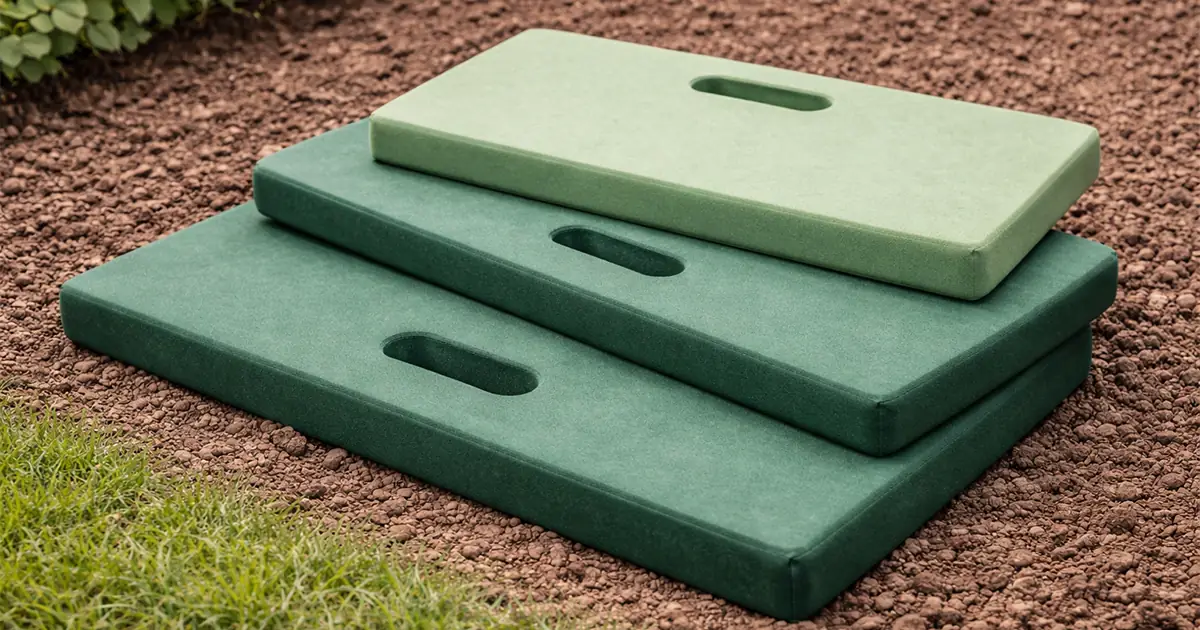
This guide covers best garden kneeling pads — what to look for, which models perform best, and how to match the right option to your routine. A simple kneeling pad is enough for gardeners who want pressure relief without carrying a frame, folding legs, or support handles. If your main problem is direct knee contact with soil, gravel, pavers, or concrete, a good pad solves that efficiently. The key is buying the right pad for your use pattern, not the cheapest one with the biggest “extra thick” label.
Three specs separate useful pads from disappointing ones: actual thickness, foam density, and working area. Thickness sets initial comfort, density determines how quickly that comfort disappears, and size controls how often you end up on the edge of the pad while shifting position. The difference between an $8 pad and a $25 pad is real — in short sessions on soft soil, both can feel fine, but after repeated use on hard surfaces, cheap foam compresses faster and protection drops.
Best Garden Kneeling Pads: What to Look for in a Kneeling Pad
Thickness — The Most Important Spec — Best Garden Kneeling Pads
Thickness is the first filter because it sets the pressure floor before material quality enters the discussion. For short sessions, 1.5 inches is a practical minimum. For longer kneeling blocks or harder surfaces, 2 inches or more is a safer target. Under 1 inch, most pads are too thin to maintain meaningful cushioning once load is applied, especially on concrete or compacted clay.
Thickness also needs to be read with context. A 2-inch pad made from low-density foam can compress close to 1 inch under body weight, then stay partially collapsed after repeated use. A 1.5-inch pad made from medium-high density EVA can outperform it in real sessions because it resists permanent flattening better.
Use this baseline: – Under 20-minute sessions on soft ground: 1.5 inches can work – Frequent sessions or mixed hard surfaces: target 2 inches or more – Anything under 1 inch: temporary cushioning, not real knee protection
Material — EVA Foam vs Memory Foam vs Gel
EVA foam is the most common material because it’s lightweight, water-resistant, and generally durable outdoors. Good EVA is firm enough to spread pressure without feeling rock hard. It also dries quickly and handles dirt, moisture, and abrasion better than most soft foams.
Memory foam feels softer initially but often compresses faster in repeated gardening use, especially if the outer layer allows moisture in. It can still be comfortable in short sessions, but long-term outdoor performance is less predictable unless the product has a strong protective shell.
Gel designs usually combine a gel layer with a foam base. They can reduce pressure peaks and feel more forgiving on hard surfaces, but they’re heavier and often pricier. Gel pads are strongest when sessions are long enough that pressure hotspots become the main limitation.
Size and Coverage Area
Standard pads are usually around 14×11 inches. Oversized models run closer to 18×14 inches or larger. If you hold one fixed kneeling position, standard size is often enough. If you shift knee position frequently while weeding, edging, or moving along rows, oversized pads reduce edge-of-pad moments and keep both knees supported more consistently.
Size also affects stability on uneven terrain. A larger pad gives more placement flexibility when you need to avoid stones, roots, or depressions. In mixed terrain, this matters as much as thickness.
Water Resistance and Durability
EVA is naturally water-resistant and usually the safest material for outdoor durability. Plain closed-cell EVA resists moisture uptake and dries fast after damp-ground use, which slows material breakdown.
Memory foam and textile-covered pads need closer inspection. If seams, stitched covers, or fabric layers allow water ingress, internal foam can degrade faster — durability drops even when the pad still looks fine on the surface. For long-term use, prioritize closed-cell or well-sealed designs and check reviews written after several months, not just week-one impressions.
Our Top Picks at a Glance
| Product | Best For | Thickness | Material | Trade-Off |
|---|---|---|---|---|
| Gorilla Grip Premium Kneeling Pad | Best Overall | 1.5″ | High-density closed-cell EVA | Not oversized; long sessions on concrete still need breaks |
| K.I. Store Extra Thick Garden Kneeling Pad | Best for Long Sessions | 2.36″ | EVA foam + outer cover | Bulkier and higher price |
| ComfiLife Gel Enhanced Kneeling Pad | Best Gel Option | 1.57″ | Gel layer + high-density foam | Heavier than plain EVA |
| Fiskars Large Ultra Light Kneeling Cushion | Best Budget Pick | 0.75″ | Thin EVA | Compresses fast on hard surfaces |
Best Overall — Gorilla Grip Premium Kneeling Pad
What It Does Well
Gorilla Grip balances thickness, durability, and price without overcomplicating the format. Listed dimensions are 17.5×11 inches with 1.5-inch thickness — enough cushioning for routine home gardening sessions. The closed-cell, dense foam profile is firm enough to spread load while resisting quick collapse under repeated kneeling.
Water and dirt resistance are practical strengths. The pad handles damp soil well, rinses clean quickly, and doesn’t gain much weight after use. The size is also easy to carry between beds.
Where It Falls Short
For very long sessions on concrete or stone, 1.5 inches can still feel limited after sustained pressure. The 17.5×11 footprint is larger than small pads but not truly oversized for users who shift position constantly.
Who Should Buy This
Buy Gorilla Grip if you want a reliable daily-use pad with balanced cushioning and proven durability. It fits most gardeners working in short-to-medium kneeling blocks across mixed surfaces. Check price on Amazon →
Best for Long Sessions — K.I. Store Extra Thick Garden Kneeling Pad
What It Does Well
K.I. Store is the strongest long-session pick at 2.36 inches thickness and roughly 22×13.4 inches unfolded. That combination changes real comfort in extended kneeling by reducing pressure peaks and giving more room for knee repositioning.
The larger platform is especially useful for row work where your knees shift frequently. Instead of landing on pad edges every few minutes, you stay within the cushion zone longer — which reduces cumulative irritation in 30+ minute sessions.
Where It Falls Short
Size and thickness add bulk. Storage is less convenient than standard pads, and carry feel is less nimble when moving quickly between many small zones. Price is also higher than standard 1.5-inch EVA options.
Who Should Buy This
Choose K.I. Store if session length is your main constraint and you regularly kneel 30+ minutes at a time. The added thickness and area are meaningful when comfort consistency matters more than compactness. Check price on Amazon →
Best Gel Option — ComfiLife Gel Enhanced Kneeling Pad
What It Does Well
ComfiLife Gel Enhanced is the right choice when pressure-point control is your priority. Listed specs are approximately 18×12 inches with 1.57-inch thickness and gel-plus-foam construction. The gel layer reduces hotspot intensity on hard ground better than many basic foam-only pads, especially during medium-length sessions.
The footprint is larger than many standard pads, so repositioning is easier. For users who feel discomfort concentrated in specific kneecap zones, gel-enhanced cushioning can feel more forgiving than firm EVA alone.
Where It Falls Short
Gel designs are heavier and usually cost more than plain EVA. If sessions are short and on soft soil, the added weight and cost won’t produce meaningful benefit. Durability depends on layer bonding quality, so longer-term reviews matter more here than for basic EVA.
Who Should Buy This
Pick ComfiLife Gel Enhanced if hard surfaces are common in your routine and you want softer pressure distribution without moving to a full kneeler frame. Check price on Amazon →
Best Budget Pick — Fiskars Large Ultra Light Kneeling Cushion
What It Does Well
Fiskars Ultra Light is a practical entry when price and portability are your top filters. Listed dimensions are approximately 18×11 inches at 0.75-inch thickness. It’s lightweight, simple, and easy to move across work areas. On soft soil and short tasks, it provides enough separation from the ground to improve comfort over bare kneeling.
Where It Falls Short — honest note: under 1.5″ compresses fast
At 0.75 inches, this is below the threshold that holds up for longer sessions. On hard surfaces, compression happens quickly and pressure relief drops. This is the core budget trade-off: low cost and low carry weight, but limited protection once load is applied repeatedly.
Who Should Buy This
Choose Fiskars Ultra Light if use is occasional, sessions are short, and you want the lowest entry cost with minimal bulk. For frequent or hard-surface kneeling, move up to at least 1.5-inch medium-high density EVA. Check price on Amazon →
What Most Buyers Overlook
Foam density often matters more than thickness labels. A 2-inch low-density pad can compress near 1 inch after around 20 uses, then perform no better than a thin budget pad. Medium-high density EVA usually maintains support longer, even at slightly lower nominal thickness. This is why review timing matters — prioritize reviews from buyers after three or more months, not only immediate post-delivery impressions.
Pad size changes real comfort on varied terrain. Standard pads around 14×11 inches are fine for fixed-position tasks, but they create frequent edge contact when you shift knees along uneven beds. Oversized pads around 18 inches or more reduce those edge moments and keep load inside the cushioned area more consistently.
Water resistance degrades differently by construction style. Plain closed-cell EVA handles moisture cycles well. Pads with textile outer layers, seams, or stitched joints can let water in over time, especially at stress points. Once moisture reaches internal foam repeatedly, compression resistance drops faster and durability declines even when the pad still looks fine.
Realistic Expectations
No kneeling pad eliminates discomfort during long kneeling — it reduces direct pressure, it doesn’t remove cumulative load from long static postures. On concrete or stone, even a 2.5-inch pad can leave pressure marks after 30+ minutes. Position changes and short standing breaks remain necessary regardless of pad quality.
Durability follows material quality and usage intensity. Good EVA pads commonly last two to three seasons with moderate use. Budget pads, especially thin ones, often show visible compression after one heavy season. Treat pad thickness as a consumable spec and reassess when support noticeably drops.
Quick Decision Guide
- Short sessions (under 20 min), soft ground → any 1.5″+ pad
- Longer sessions or hard surfaces → 2″+ EVA or gel
- Maximum mobility, many zones → oversized pad (18″+)
- Minimum budget → budget pick (accept the durability trade-off)
- Need stand-up support too → a pad won’t help: see garden kneeler vs kneeling pad
Kneeling Pads vs Garden Kneelers — When a Pad Is Enough
A pad is enough when your primary issue is ground pressure and you can stand up comfortably without assistance. In short-to-medium sessions, a quality 1.5-inch+ pad delivers solid value with minimal setup, low weight, and fast repositioning.
A pad isn’t enough when stand-up mechanics are the bottleneck. If knee pain spikes during transitions, cushioning alone doesn’t solve the problem — there’s no leverage support. That’s where a framed kneeler with handles changes outcomes more than adding another half-inch of foam.
The clean decision rule: pressure-only problem → pad. Pressure plus transition problem → kneeler. Compare formats: garden kneeler vs kneeling pad. For frame-supported options: best garden kneeler and seat.
Frequently Asked Questions
How thick should a kneeling pad be? Use 1.5 inches as the baseline minimum for short sessions. For longer blocks or hard surfaces, 2 inches or more is a better target. Under 1 inch usually behaves like temporary cushioning rather than durable protection.
Are gel kneeling pads better than foam? Not always. Gel can improve pressure distribution on hard surfaces, but it adds weight and cost. Medium-high density EVA often gives better portability and durability per dollar. Choose based on session length and surface hardness, not marketing claims.
Can I use a kneeling pad on concrete? Yes, but thickness and density become critical on concrete. Thin pads compress quickly and lose effectiveness. For repeated concrete use, target 2-inch+ quality cushioning and add standing breaks. For the full selection framework: garden kneeler buying guide.
For general gardening guidance, see the Royal Horticultural Society.